
The 3-point method of proper pruning of large limbs
Three-step method of pruning larger limbs
When doing any type of pruning, always use a sharp pruning saw for making pruning cuts. Also, be sure to disinfect your pruning tools with alcohol or a 10% bleach solution after each pruning cut to avoid spreading diseases.
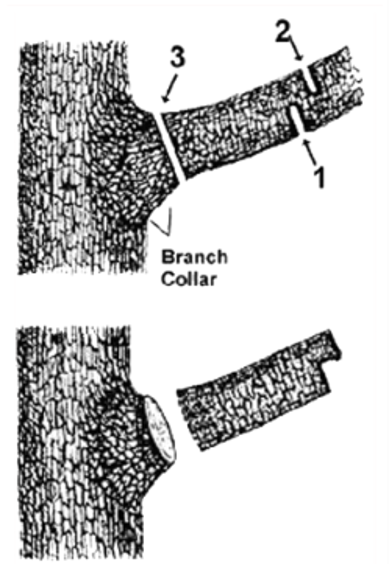
Step one
Select the branch that you want to remove. On large limbs, the first cut should be 12 to 18 inches from the limb’s point of attachment. The pruning cut should be an undercut made 1∕2 way through the branch (see diagram). This pruning cut is very important because it relieves weight from the branch collar and prevents accidental tearing of bark from the tree’s trunk when the limb is removed.
Step two
The second pruning cut should be made on the outside of the first cut (i.e., farther from the trunk). Cut all the way through the limb from the top down, thus removing the weight of the branch.
Step three
The final cut should be made next to the tree’s trunk outside of the branch collar. Cut from the top down and cut all the way through the remaining branch stub. The branch collar should be left intact. Do not cut the branch flush with the tree’s trunk. A proper cut avoids large wounds and allows the tree’s wound to close quickly.
Should I use wound treatments?
In general, wound treatments, such as tree paint or wound dressing, are not recommended. These compounds slow down wound closure and promote decay. One exception when wound treatments are recommended, is the case of oak trees that are pruned during the growing season. Using wound treatments on oaks is important to keep out insects that transmit the oak wilt fungus.
When should I prune trees?
Most deciduous trees should be pruned in late fall to winter. At this time of year, you can see the overall branch structure easily, and most insects and disease-causing organisms are not active. Late fall/winter pruning is especially important for oak trees to help prevent spread of the fungus that cause oak wilt. Late spring and summer are usually not good times of year to prune because disease pathogens are present and wound closure is slower. If you prune in late winter, some trees may bleed or ooze sap excessively in the early spring. The bleeding may be unsightly but does not harm the tree. Examples of trees that bleed excessively are maple, willow, birch, walnut, beech, hornbeam, elm, and yellowwood.
Pruning terms and definitions
- Branch collar: the ring of trunk tissue that surrounds a lateral branch at the point of attachment to the stem.
- Double leaders: two major, terminal growing points located at the top of the tree.
- Root suckers: vigorous, upright, adventitious shoots that arise from latent buds below the graft union or at the base of the tree.
- Scaffold branches: the large branches that form the main structure of the crown of a tree.
- Topping: an improper pruning technique that reduces the height of a tree by removal of large branches back to larger primary branches. This technique is not recommended.
- Watersprouts: vigorous, vertical, adventitious shoots that arise from latent buds above the ground or graft union on older wood.
For help with seasonal lawn care and landscaping, contact A&R Lawn Care and Landscaping to discuss your property’s needs.
📞 Get Your Free Quote Today!
👉 Call us today at 920-320-1197
🌐 Website: https://www.arintegrative.com/commercial-lawn-care-services/
📘 Facebook: https://www.facebook.com/profile.php?id=61550870677060
A&R also offers Commercial Janitorial Services like:
- Office Janitorial Cleaning
- Commercial Janitorial Cleaning
- Medical Janitorial Cleaning
- Disinfecting Services
- Window Care
- Floor Care (carpet, strip and wax)
- Special Services
- Post Construction Cleaning
- Commercial Building Services
Visit our web page: www.ARINTEGRATIVE.COM
A&R Integrative offers Janitorial services near you